
There was a time when marrying for love was unheard of. Today, it’s the norm (… at least theoretically). What’s funny about that is that we think romantic-based marriage is “the way marriage has always been.” But what we call a “traditional” marriage has existed for about five minutes in human history. For most of history, marriage served political, economic and family purposes rather than personal ones.
In her book, Marriage, A History: How Love Conquered Marriage, historian Stephanie Coontz traces the history of marriage from ancient Babylon to today. The picture she paints of marriage through the ages shows how the idea of marrying for love is surprisingly recent.
It’s also an idea that most of our ancestors would have found to be absurd.
“Traditional” Marriage Is Newer Than You Think
For thousands of years, marriage had nothing to do with love. As a matter of fact, most societies saw love as a threat to a properly ordered marriage.
Couples wed to build political alliances, raise capital, and expand the workforce. They married to form economic partnerships, not love relationships.
Even the 1950s breadwinner-and-homemaker model we picture as classic may have in fact been the most untraditional marriage in world history.
“Marriage” was primarily a matter of practicality, not romance.
The Marriages We Recognize Today
If marriage has always been shaped by what people and societies needed from it, today’s variety looks less like a break from tradition and more like the latest chapter.
Same-sex marriages. Same-sex marriages have been a constitutional right in all 50 states since 2015. Before then same sex marriage was legal in 37 states but banned in the other 13.
Now that they can marry, do same sex couples have better marriages?
Not really.
Research done on same sex marriages since that date has found that committed gay and lesbian couples are about as satisfied as married heterosexual couples. Their divorce rates are also similar.
Parenting marriages. In a parenting marriage, couples with children stay together without being romantically involved. They often have separate bedrooms or living spaces and have renegotiated the “rules” of their marriage to suit their situation. They’re committed to putting the children first and focused primarily on cooperative co-parenting.
Polyamorous and non-monogamous marriages. While non-monogamous marriages raise more than a few eyebrows, the truth is that history is replete with stories of married men with mistresses and married women with lovers.
While the more traditional among us might like to believe that being in a polyamorous marriage would be threatening or destabilizing, research has found no difference in satisfaction, commitment or passionate love between consensually non-monogamous and monogamous relationships.
In fact, non-monogamous participants reported higher trust and less jealousy than their monogamous counterparts.
Marriages of convenience and marriages for money. These are the oldest kinds of marriage there are.
Marrying for political and economic advantage was the norm until the “Love Revolution” of the late 18th century.
Today, 93% of married Americans call love a very important reason they married, but 31% also admit that financial stability was very important too.
While there isn’t much good research on how current marriages of convenience turn out, the existing research does suggest that sharing financial values with your partner is linked with better relationship satisfaction.
Modern Marriage
A marriage built on love, a marriage built on a shared goal of raising children, and a marriage built on a financial partnership all have a long history.
None of them is the “real” marriage.
All of them are part of the landscape of modern marriage.
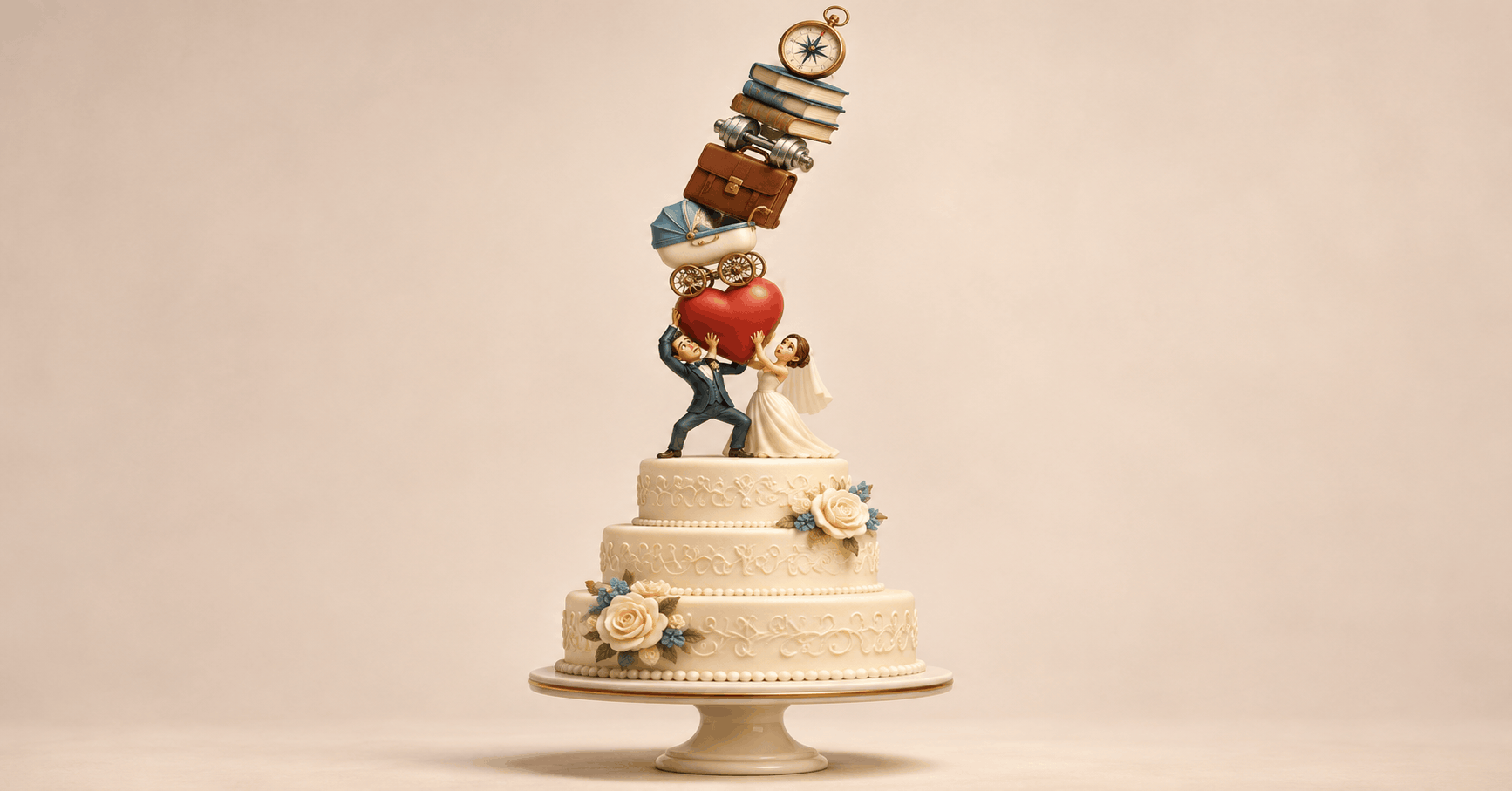
And, for better or for worse, modern marriages are expected to be MORE than any traditional marriage ever was.
As psychologist Esther Perel posits, “Today, we marry for love and expect one person to be our lover, best friend, co-parent, intellectual equal, fitness buddy, life coach, and personal development guru all at once.”
It’s a lot.
So it’s no wonder that modern marriages, of whatever type or description, are crumbling under the weight of our out-sized expectations.
The Question That Matters Most
Instead of quibbling over what kind of marriage is a real marriage, or a traditional marriage, it’s time we ask ourselves a different question.
Actually, we need to ask TWO questions:
- Are you happy in your marriage?
- Does it serve the purpose you want and need it to serve?
A marriage (whether conventional or unconventional) works when both people choose it, understand it, want to be in it, and feel respected, safe and connected.
It’s even better when they feel loved.
An unhappy marriage (whether conventional or unconventional) can look identical from the outside.
But on the inside, it’s disconnected, dissatisfying, and doesn’t meet at least one of the spouses’ needs.
The difference is not the kind of marriage you’re involved in.
It’s the quality of the marriage you’re involved in that matters.
The best marriage isn’t the most traditional one or the most unconventional one.
It’s the one that both people would choose again.